- December 24, 2025
Best Wellness Activities for Mental Relaxation and Stress Relief
- November 24, 2026
- in Life

Your mind is tired. Not the kind of tired that sleep fixes. The kind that comes from constant notifications, endless to-do lists, and the low hum of stress that never quite goes away. You do not need a week-long retreat. You need small, repeatable activities that tell your nervous system it is safe to slow down.
This guide covers the best wellness activities for mental relaxation. Some take five minutes. Some take an hour. All of them are free or cheap. And none of them require you to be good at anything.
Why Relaxation Is Not Optional?
Stress is not just a feeling. It is a physical state. Your heart rate rises, muscles tense, digestion slows, Your brain goes into problem-solving mode and stays there.
That state is useful in short bursts. It becomes harmful when it never turns off. Chronic stress affects sleep, immunity, and mood. Relaxation is not a luxury. It is maintenance for your mind and body.
The activities below work in different ways. Some calm the body first. Some quiet the mind. Some give your brain a single focus so it stops spinning. Try a few keep what works.
Read More: Best Life Habits for Women Over 40 to Stay Healthy and Strong
Mind Relaxing Activities for Adults

These require no special equipment. They do not cost money. They can be done almost anywhere.
The 4-7-8 Breathing Technique
This is one of the fastest ways to calm your nervous system. Breathe in through your nose for 4 seconds. Hold for 7 seconds. Breathe out slowly through your mouth for 8 seconds. Repeat four times.
The long exhale is the key. It triggers the parasympathetic nervous system, which is the "rest and digest" mode. Most people feel calmer after just one round. Try it before a meeting or when you cannot sleep.
Grounding with the 5-4-3-2-1 Method
When your mind is racing, grounding pulls you back to the present. Look around and name:
- 5 things you can see
- 4 things you can touch
- 3 things you can hear
- 2 things you can smell
- 1 thing you can taste
It sounds simple. It works because it forces your brain to focus on sensory input instead of anxious thoughts. Use it during panic attacks or moments of overwhelm.
Progressive Muscle Relaxation
Lie down or sit comfortably. Starting with your toes, tense each muscle group for five seconds then release. Move up through your body: feet, calves, thighs, stomach, chest, arms, shoulders, face.
The contrast between tension and release teaches your body what relaxation feels like. It is especially useful if you hold stress in your shoulders or jaw.
How to Relax Mind from Stress and Anxiety?
Anxiety is different from stress. Stress usually has a source you can name. Anxiety is often vague. It is a sense of dread without a clear reason. These activities help with both.
Journaling
Write down what is in your head. Do not edit do not worry about grammar. Just get it out. The act of putting thoughts on paper makes them feel less overwhelming. It also helps you spot patterns. You might notice the same worry repeating. That awareness is the first step to addressing it.
Mindful Walking
Walk for ten minutes without your phone. Pay attention to your feet hitting the ground. Notice the air on your skin. Look at what is around you. This is not exercise. It is attention training. When your mind wanders, bring it back to the walk that is the whole practice.
Time in Nature
Being outdoors is one of the most reliable ways to reduce stress. It does not have to be a hike. A park bench works. Ten minutes of quiet time outside lowers cortisol levels and improves mood. Leave your phone in your pocket Just sit and breathe.
Creative Activities
Colouring. Knitting. Drawing. Playing an instrument. These activities give your brain a single focus. They occupy the "problem-solving" part of your mind with something low-stakes. For a few minutes, you cannot worry about work because you are busy choosing colours.
You May Also Read: Trending Life Quotes for Instagram: Short Captions and Positive Vibes 2026
Relaxing Activities for Mental Health
These are slightly more structured. They take a bit more time but offer deeper relaxation.
Meditation
- You do not have to be good at it. You do not have to clear your mind. The goal is not to stop thinking. It is to notice your thoughts without getting pulled into them.
- Start with five minutes. Sit comfortably. Close your eyes or look at a fixed point. Focus on your breath. When your mind wanders, notice it. Then return to your breath. That return is the practice.
- Apps like Insight Timer or Smiling Mind have free guided sessions if you want structure.
Yoga
- Yoga combines movement with breath. It is not about flexibility. It is about linking movement to breathing and staying present. Even ten minutes of simple stretches with conscious breathing can shift your mental state.
- You do not need a class. Free videos on YouTube cover basic routines for stress and sleep. Start with something gentle. Do not push yourself.
Body Scan Meditation
Lie down. Close your eyes. Bring your attention to your toes. Notice any sensation there. Then move slowly up your body, from your feet to your head. Do not try to change anything. Just notice.
This is a common technique for sleep and stress relief. It can be done in ten minutes. It is especially helpful if your mind is too active for traditional meditation.
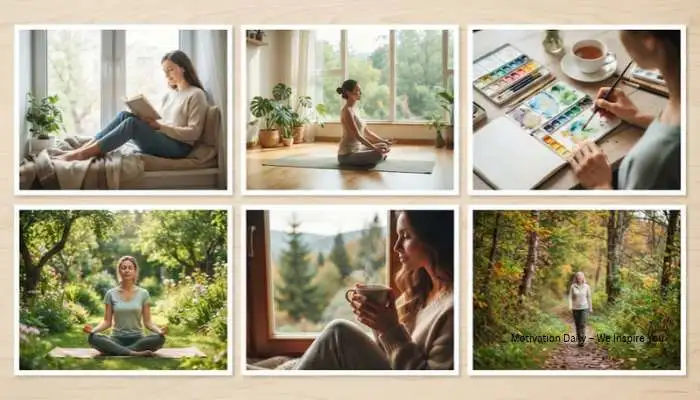
Relaxing Activities for Mental Health: Quick Ones
Sometimes you only have five minutes. These work fast.
- Warm shower. The physical sensation of warm water is calming. It also gives you a break from screens.
- Listen to one song. Not a playlist. One song, Lie down and listen that is it.
- Stretch. Not a full routine. Just reach your arms up. Roll your shoulders. Touch your toes. Notice the tension release.
- Step outside. Ten seconds of fresh air can interrupt a spiral.
- Pet an animal. If you have a pet, sit with them. If not, watch videos of animals, It sounds silly it works.
FAQs
1. What are the best wellness activities for mental relaxation?
Activities that calm the body and mind together work best. The 4-7-8 breathing technique, progressive muscle relaxation, mindful walking, journaling, and time in nature are all effective.
2. How can I relax my mind from stress and anxiety quickly?
Try the 4-7-8 breathing technique or the 5-4-3-2-1 grounding method. Both take under five minutes and can shift your state fast. Grounding is especially useful during panic or overwhelm.
3. Do I need to be good at meditation for it to work?
No. Meditation is not about being good. It is about showing up. Even five minutes of sitting and breathing helps. When your mind wanders, that is normal. Bringing it back is the practice.
4. What is the easiest relaxing activity for beginners?
Mindful walking. Go for a short walk without your phone. Pay attention to your feet, the air, and your surroundings. You do not need any training. You just need to show up.
5. Are relaxing activities for mental health expensive?
No. Most of them are free. Breathing exercises, grounding, walking, journaling, and stretching cost nothing. Yoga and meditation can be done with free videos. You do not need a gym or a subscription.
6. What if I do not have time for relaxation?
Start with five minutes. A single breathing exercise or a short walk is enough to reset. Relaxation is not a time sink. It is maintenance for your brain. Five minutes of calm often saves an hour of scattered focus.
7. Can relaxation activities replace therapy?
No. They are a support, not a replacement. If you are dealing with anxiety, depression, or trauma, please talk to a mental health professional. Relaxation practices help you manage day-to-day stress, but they are not treatment for clinical conditions.
8. What is the best activity for mental relaxation before bed?
A body scan meditation or progressive muscle relaxation both help your body shift into rest mode avoid screens. Try the 4-7-8 breathing technique if your mind will not quiet down.
you may also like


- December 24, 2025
What are the best startup marketing strategies for 2026?...

- December 09, 2025
8 Ways to Be Successful in Life | Simple Success...

- November 17, 2025
Best Bible Quotes for Motivation

- November 17, 2025
How Do You Motivate Your Team Interview Question: Complete Guide...
- November 06, 2025